

Introduction
Resolve’s 2025 YouGov survey revealed a stark reality: 56% of victims and witnesses of anti-social behaviour (ASB) did not report it to any agency (with a subsequent increase to 63% in their 2026 YouGov survey results). This statistic raised a critical question for us: Why?
To find the answer, we launched a survey to look beyond the numbers. By engaging directly with victims and witnesses about their personal experiences of staying silent, we aimed to uncover the factors that influence the non-reporting of ASB.
This blog details our findings, shedding light on why so many feel unable or unwilling to come forward and exploring how we can bridge the gap between experiencing ASB and seeking help.
Key findings
89%
of respondents had experienced ASB that they did not report.
72%
said the unreported behaviour was very serious and significantly affecting their life.
53%
cited a belief that nothing would be done as a major factor in not reporting.
80%
said the ASB got worse during the period they did not report.
84%
said knowing agencies would take the report seriously would have made them more likely to come forward.
67%
of respondents identified as having a disability or long-term health condition.
Who responded to our survey
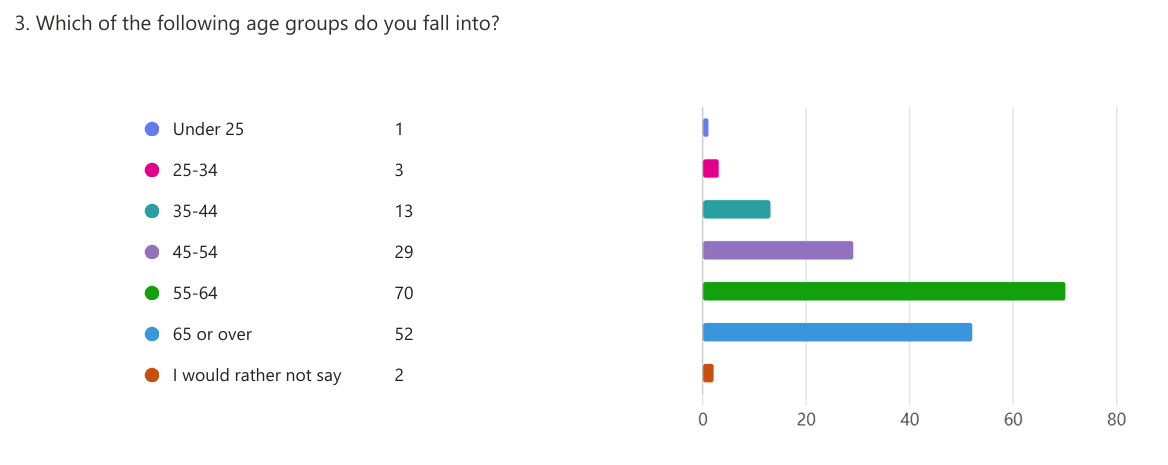
The survey received 171 responses from victims and witnesses of anti-social behaviour. The majority of respondents were aged 45 and over, with the largest groups falling in the 55–64 (70 respondents) and 65 or over (52 respondents) age brackets.
Notably, 114 respondents (representing 67% of those who answered) identified as having a disability or long-term health condition, reflecting the disproportionate impact of ASB on vulnerable people. Respondents were broadly spread across urban (79), suburban (54), and rural (34) settings.
Most victims did not report – and most experienced ASB repeatedly
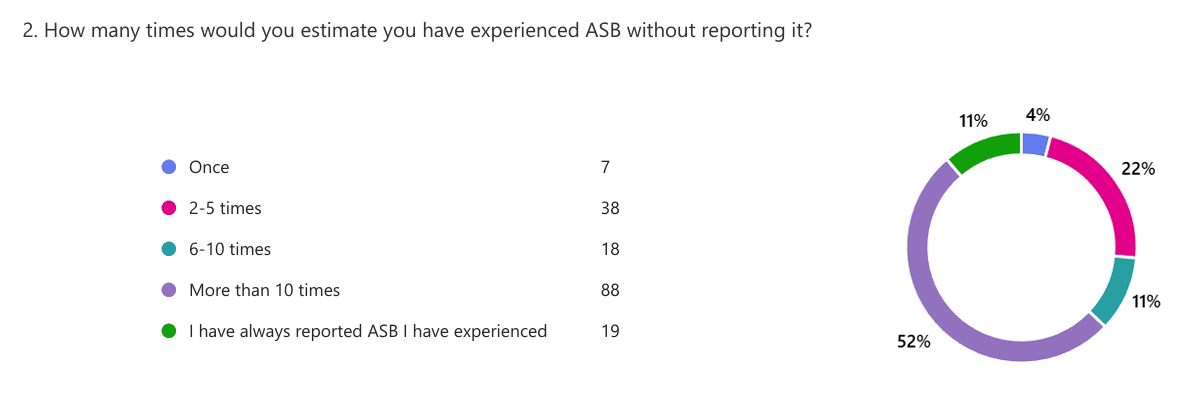
89% of respondents said they had experienced ASB but did not report to any agency. Of those, the vast majority were not dealing with a one-off incident – 52% had experienced unreported ASB more than ten times, and a further 22% between two and five times. This is not a picture of people dismissing minor, isolated incidents. It is a picture of people enduring persistent, repeated behaviour and choosing, for a range of deeply understandable reasons, not to come forward.
The anti-social behaviour was serious – but victims still did not report
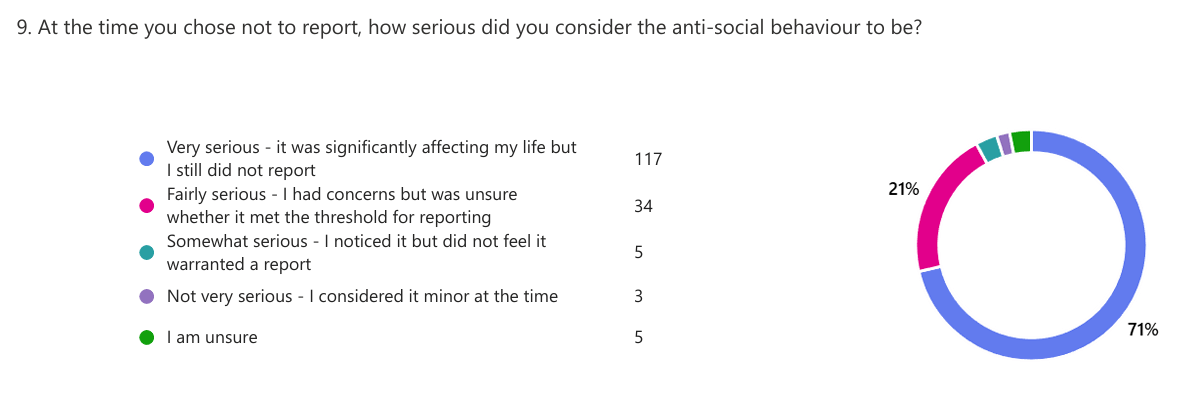
72% of respondents said they considered the ASB very serious at the time they chose not to report – meaning it was significantly affecting their life. A further 21% described it as fairly serious. Silence, in other words, is not a reflection of severity. It is a reflection of a system that victims do not trust to help them.
Why victims stayed silent
The single most influential reason for not reporting was a belief that nothing would be done – cited as a major factor by 53.3% of respondents. This finding demonstrates that the primary barrier to reporting is not practical, it is experiential. Victims have either learned from previous contact with agencies that reporting leads nowhere, or they have heard enough from others to believe it. The open-text responses reinforce this powerfully – respondents described reporting every single incident and seeing nothing change, and others described perpetrators successfully manipulating the situation to present themselves as the victim.
“I’ve reported multiple times, but nothing ever gets done, agencies can’t be bothered to follow it up and care nothing for my well-being.”
Other commonly cited factors included fear that the situation would get worse if reported, not wanting to be identified as the complainant, concerns about personal safety, and a lack of trust in agencies following a previous bad experience.
The cost of not reporting
The decision not to report did not protect victims’ wellbeing – it compounded it. 79 respondents said they felt anxious or stressed about whether the behaviour would escalate. 75 felt isolated and alone. 73 felt helpless or powerless. Only one respondent said they felt relieved by their decision not to report.
Crucially, 80% of respondents said the ASB got worse during the period in which they did not report it – with 110 saying it got significantly worse. Not a single respondent said the behaviour improved or stopped on its own.
This is unambiguous evidence that silence does not make ASB go away. It makes it worse.
Interestingly, when asked whether they wished they had reported at the time, the responses were telling. The largest group – 31% of respondents – said they regret not reporting the ASB. A further 30% said they regret not reporting but understood why they had not at the time.
What would have made a difference?
The most significant factor that would have made victims more likely to report was knowing that agencies would take the report seriously – cited by 142 respondents, representing 84% of those who answered this question. This dwarfs every other factor and sends an unambiguous message to agencies:
The single most impactful thing you can do to increase reporting is to demonstrate, consistently and credibly, that reports will be acted upon.
Other significant factors included knowing that there was something agencies could actually do to help (96 respondents), knowing what would happen after making a report (82 respondents), having a trusted advocate to report on their behalf (72 respondents), and greater confidence that reporting would not make the situation worse (70 respondents).
Conclusion
What this research tells us, above all, is that victims of anti-social behaviour are not making an uninformed choice when they decide not to report. They are making an informed one – based on past experience, on what they have seen happen to others, and on a justified fear that coming forward will change nothing, or worse, make their situation harder.
That should give us all pause. Every percentage point in this data represents a real person who endured persistent, often serious harm, because the system had not yet earned their trust.
The encouraging part of this research is that the solution victims are asking for is not complicated. They want to know that when they report ASB, someone will actually do something about it. Delivering that consistently, every time, for every victim, regardless of where they live or who they report to, is the single most powerful action agencies can take to close the reporting gap – and to make sure no victim has to face anti-social behaviour without support ever again.
To consider
It is worth noting that the findings of this survey are likely influenced by the nature of our audience. Victims rarely find ASB Help at the very first moment they experience anti-social behaviour – by the time they reach us, many have a history of reporting and a history of inadequate agency responses. The strength of feeling reflected in this data, particularly around a belief that nothing will be done, may therefore reflect those accumulated experiences as much as it reflects a single decision not to report.
This does not diminish the findings, but it is worth bearing in mind when interpreting them – and it underlines the importance of future research drawing on a broader sample of victims, including those who have had more positive experiences of the reporting process.