

Balance Matters: Research Report 2026
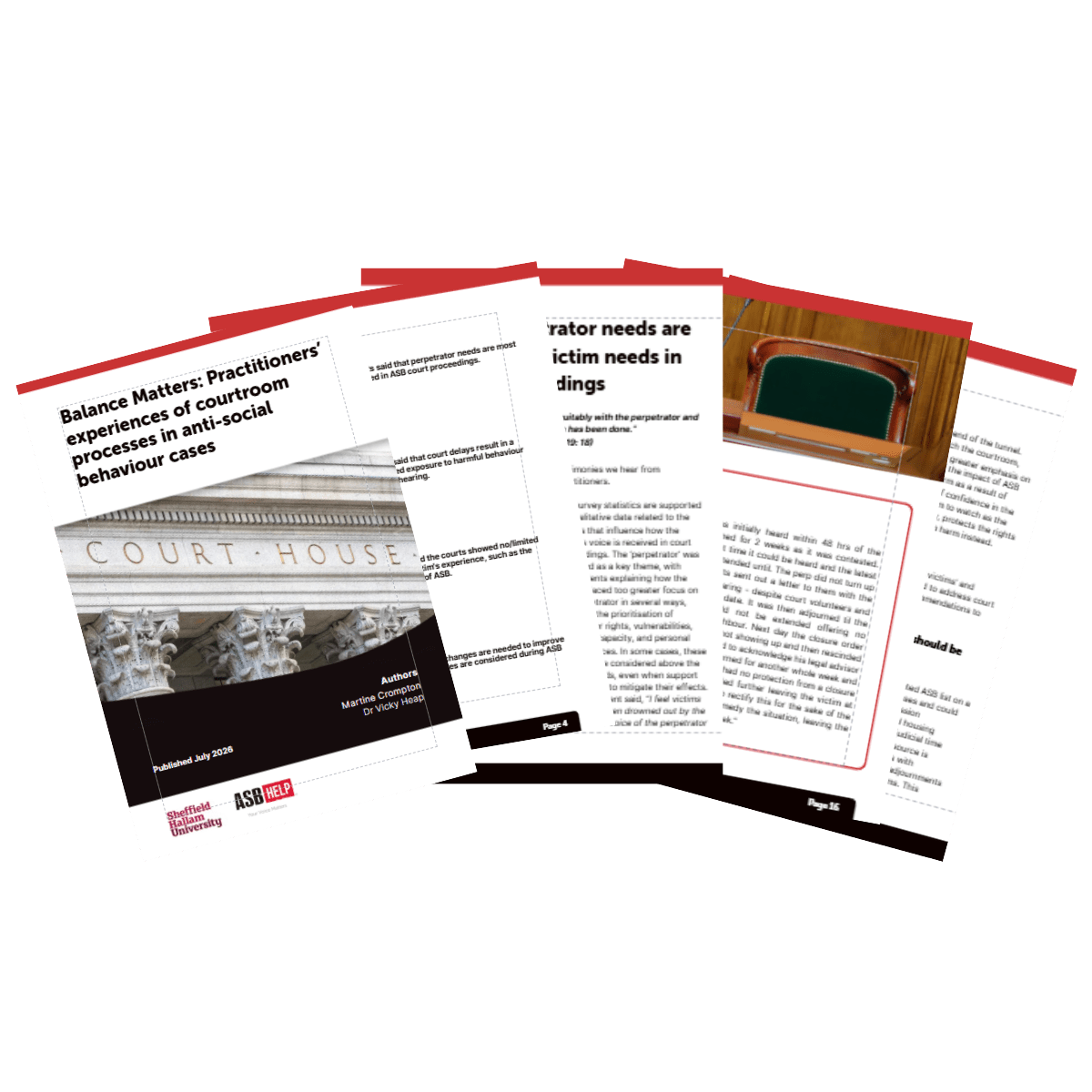
Balance Matters: Practitioners' experiences of courtroom processes in anti-social behaviour cases
Our new research report examines the first-hand experiences of legal and frontline practitioners revealing a flawed court system where practitioners feel the needs of anti-social (ASB) perpetrators are routinely prioritised over the safety and well-being of victims.
Published: August 2026
Authors: Martine Crompton and Dr Vicky Heap
Our key findings
The main findings from our research report include:
1. Perpetrator needs are prioritised over victim needs in ASB court proceedings
Survey respondents identified that perpetrator needs are prioritised in court in ways that cause harm to victims of ASB. This was seen through a prioritisation of perpetrator rights, vulnerabilities, disability, capacity, and personal circumstances.
2. Victims are experiencing ongoing and/or escalating harm due to court delays and adjournments
Respondents reported that lengthy delays between reporting the incident(s), case preparation and the hearing date negatively impacted victims. This was often compounded by case adjournments requested by the prosecution, which left victims exposed to continuing ASB.
3. Court proceedings do not adequately consider the cumulative effect of ASB victimisation
Findings suggest that the courts show limited awareness of ASB victims’ experiences, such as the cumulative impact of ASB. As a result, victims lose faith in the criminal justice system and disengage from reporting.
Our recommendations
As a result of our data, we propose 6 policy and practice recommendations to rebalance court processes to better meet victims’ needs:
1: Dedicated ASB court lists should be introduced at major court centres
2: Establish compulsory training for the judiciary and court staff on the persistent nature and cumulative impact of ASB victimisation
3: Introduce a new equality and proportionality assessment for all ASB cases, supported by training to better understand the complex personal circumstances often associated with ASB.
4: Create a mandatory requirement for a case update to be provided to the court when ASB cases are heard
5: Create a mandatory requirement for victim statements to be read in court
6: Part 65 of the Civil Procedure Rules (proceedings relating to anti-social behaviour and harassment) should be amended to expedite ASB cases and mitigate ongoing harms
Anti-social behaviour continues to affect communities across England and Wales, with around one million incidents recorded annually. While enforcement activity remains a key focus of government policy, less attention has been given to how victims/practitioners experience the court process intended to provide protection and resolution.
This report explores practitioners’ experiences of ASB court proceedings and the challenges they encounter when advocating for victims. Drawing on responses from ASB practitioners across England and Wales, the research highlights concerns about delays, victim participation, judicial understanding of ASB, and the balance of consideration between victims and perpetrators.
The findings reveal significant barriers that can leave victims exposed to ongoing harm, undermine confidence in the justice system, and affect long-term engagement with support services.
Download the report to explore the full findings and recommendations.
Thank you
We want to say thank you to the practitioners who brought this issue to our attention, and to those who took the time to complete our survey and have further discussions with us.
We want to say thank you to Sheffield Hallam University for supporting this research.
We want to say thank you to our trustees, Dr Vicky Heap and Adrian Tonge for playing a big part in producing this vital research.
Got a question? Get in touch!
If you have any questions regarding our research report, please feel free to get in touch.