

At ASB Help, we know that the quality of support a victim receives often depends on the knowledge and confidence of the practitioners working with them. That is why we have developed a range of resources designed to help professionals working in housing, policing, local authority, and community safety roles handle anti-social behaviour (ASB) cases with greater consistency and victim focus.
Below you will find toolkits, guides and resources which have been developed by a team with deep expertise in anti-social behaviour and influenced by real victims of ASB.
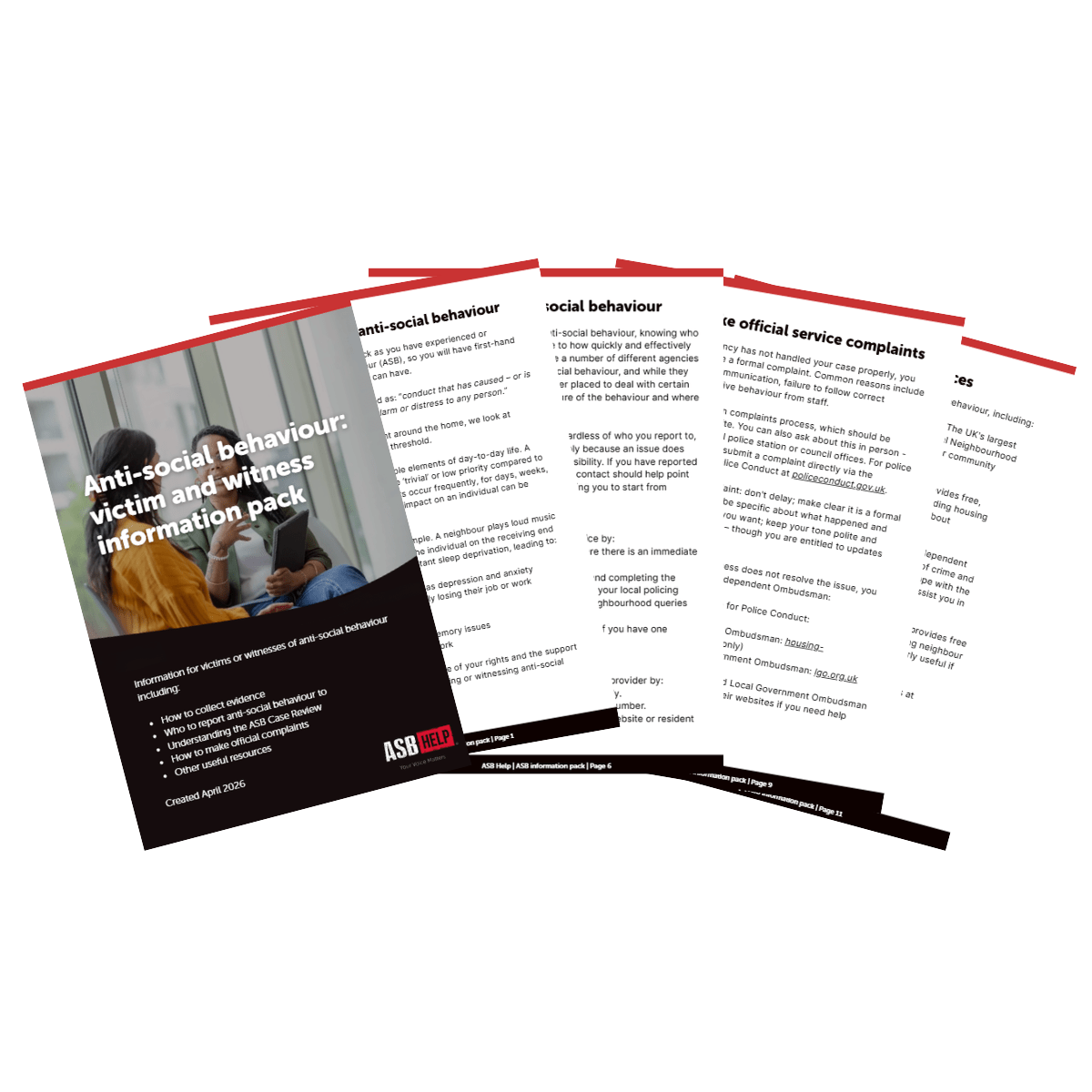
ASB Information Pack
Designed for frontline professionals to share with victims/witnesses of anti-social behaviour, our ASB Information Pack covers:
- How to collect evidence
- Who to report anti-social behaviour to
- Understanding the ASB Case Review
- How to make official complaints
- Other useful resources
Designed alongside Jo Grimshaw, Head of Anti Social Behaviour, Youth Engagement, Partnerships and Tactical Lead for Serious Violence at Surrey Police, Jo states:
“The concept was simple but powerful – a booklet designed specifically for victims receiving support, produced by an independent charity that provides impartial advice and guidance to those affected by ASB. The booklet would also include space at the back for officers and practitioners to add localised information, including contact details for the lead officer, relevant partner agencies, and signposting to other support services.”
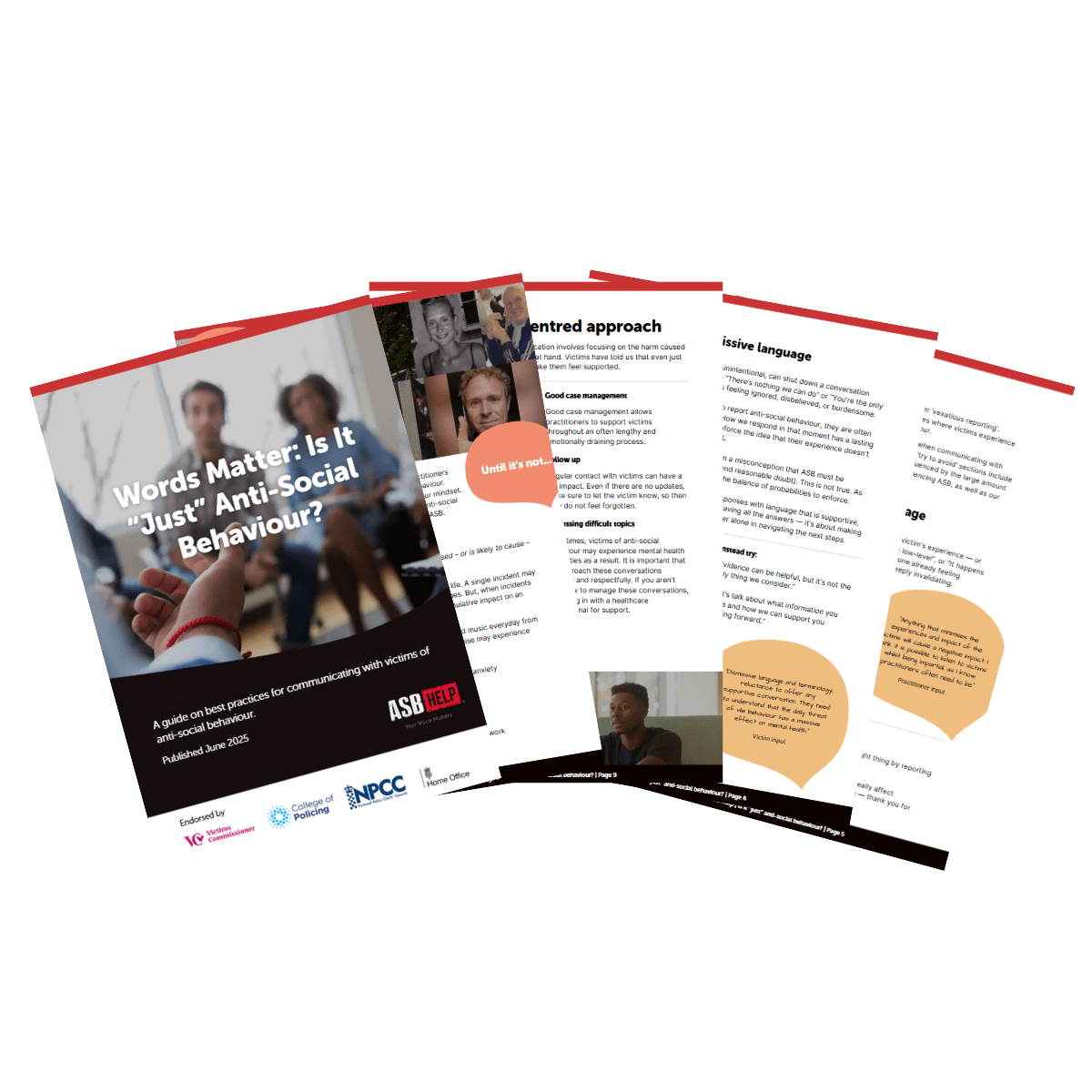
Practitioner Communication Guide
Anti-social behaviour is never “just low-level” for the people living through it – and the language practitioners use can make or break a victim’s experience of getting help. Developed with input from victims and frontline professionals, our Practitioner Communication Guide covers:
- Harm-focused communication
- Clear alternatives to common phrases that can feel dismissive or invalidating
- Ways to gently signpost victims to mental health services
- Strategies to avoid passing people from agency to agency without support
Endorsed by: College of Policing, National Police Chiefs’ Council, Home Office, Victims’ Commissioner.
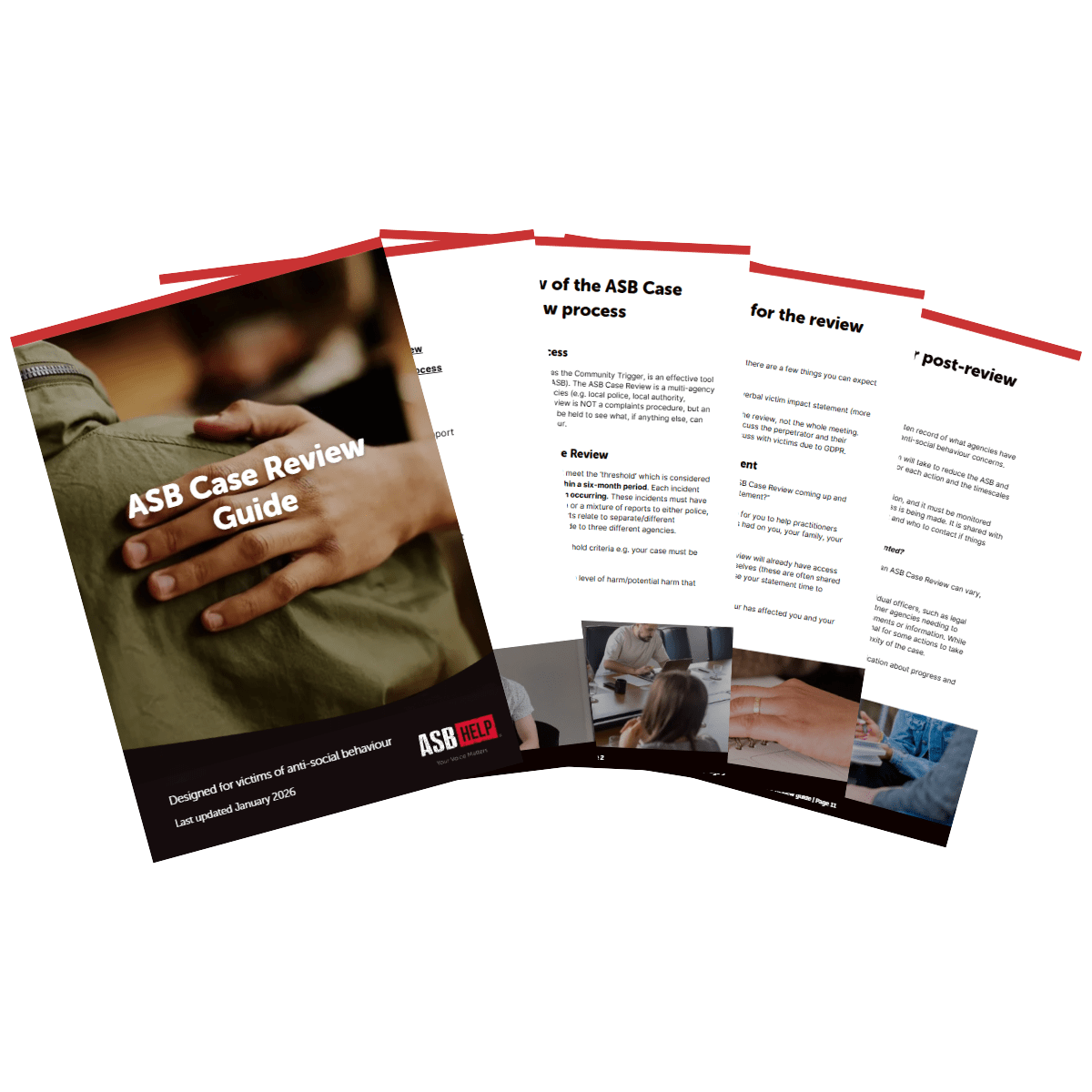
ASB Case Review guide
A practical resource to share directly with victims when signposting them to the ASB Case Review. This guide will help victims to understand:
- An overview of the ASB Case Review
- Support available during the process
- How to apply for, prepare for and appeal the process
- Key terms you might come across
By sharing this guide with victims, practitioners can help ensure they arrive at each stage of the process informed and prepared – supporting better outcomes for victims and reducing the volume of case queries coming back to your team.
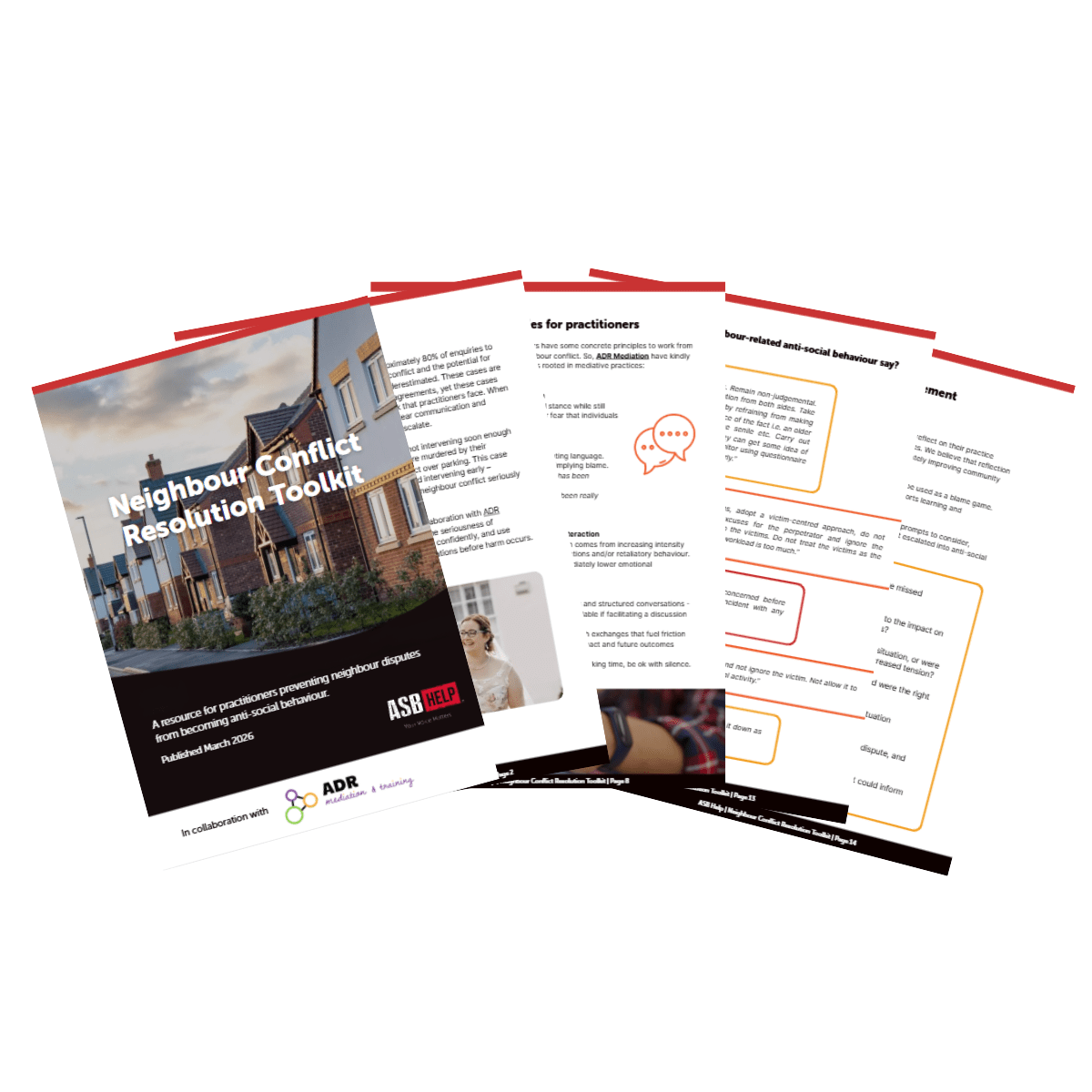
Neighbour Conflict Resolution Toolkit
Neighbour disputes are frequently dismissed as low-level – but left unaddressed, they can escalate into serious harm. Developed in collaboration with ADR Mediation for Conflict Resolution Week 2026, this toolkit includes:
- Understanding the difference between neighbour disputes and anti-social behaviour
- Early intervention approaches to prevent escalation
- Language that de-escalates vs escalates conflict
- Prompts for reflection and practice improvement
- Real victim experiences and input
Help us keep these resources free
Every resource we produce is the result of significant time and research – including surveys and consultations with victims and frontline practitioners to ensure our guidance reflects real experiences, not just theory. We are committed to keeping all of our resources free to access, because we believe every practitioner working with victims of anti-social behaviour should be able to benefit from them regardless of budget.
If you have found our resources useful, we would be incredibly grateful for any donation – however small – to help us continue producing and improving them.